🌴 What is Miami Famous For?
15 Iconic Things That Make Miami One of America’s Most Unique Cities
Miami is famous for its stunning Art Deco architecture, world-renowned South Beach, vibrant Cuban culture, colorful Wynwood Walls street art, glamorous nightlife, year-round sunshine, and unique blend of Latin American and American cultures. But Miami’s fame extends far beyond beaches and nightclubs—it’s a cultural melting pot where architectural preservation meets cutting-edge art, where Cuban coffee culture thrives alongside celebrity chef restaurants, and where neon-lit Ocean Drive represents just one small piece of a fascinating, complex city.
Whether you’re planning your first visit or you’re curious about why Miami is famous worldwide, this comprehensive guide breaks down the 15 things that make Miami iconic—from its historic Art Deco district to its modern skyline, from Little Havana’s cultural authenticity to Brickell’s cosmopolitan energy.
⚡ Quick Answer: What is Miami Known For?
- Art Deco Architecture – World’s largest collection (1930s-40s pastel buildings)
- South Beach – Iconic white sand, Ocean Drive, celebrity culture
- Cuban Culture – Little Havana, Cuban food, largest Cuban population outside Cuba
- Wynwood Walls – World-famous street art district
- Nightlife – World-class clubs, beach parties, 24/7 energy
- Year-Round Sunshine – Tropical climate, 250+ sunny days annually
- Latin American Gateway – Multicultural hub connecting Americas
📑 Table of Contents
▼- 1. Art Deco Architecture
- 2. South Beach
- 3. Cuban Culture & Little Havana
- 4. Wynwood Walls Street Art
- 5. World-Class Nightlife
- 6. Beautiful Beaches
- 7. Perfect Weather
- 8. Latin American Gateway
- 9. Diverse Food Scene
- 10. Celebrity Culture
- 11. Miami Vice Legacy
- 12. Sports Teams
- 13. Cruise Capital
- 14. Luxury Real Estate
- 15. Fashion & Style
1 Art Deco Architecture
Miami is home to the world’s largest collection of Art Deco architecture, with over 800 preserved buildings from the 1930s and 1940s concentrated in South Beach’s Art Deco Historic District. This isn’t just “some old buildings”—it’s a globally significant architectural preservation achievement that defines Miami’s visual identity.
What makes Miami’s Art Deco unique:
- Tropical Deco Style: Unlike New York’s vertical Art Deco skyscrapers, Miami developed “Tropical Deco”—horizontal buildings with pastel colors (pink, yellow, turquoise), nautical themes (portholes, railings), and streamlined “Streamline Moderne” curves
- Preservation Success Story: In the 1970s, these buildings were nearly demolished. Miami Design Preservation League (led by Barbara Capitman) saved them—creating America’s first 20th-century district on the National Register
- Neon Glow: At night, these buildings light up with neon—creating the iconic Miami Beach aesthetic you see in every movie and photo
- Ocean Drive Concentration: Ocean Drive between 5th-15th Streets showcases the densest collection—buildings like The Carlyle, Colony Hotel, and Breakwater are architectural icons
🏛️ Famous Art Deco Buildings to See:
- The Carlyle Hotel – Featured in “The Birdcage” movie
- Colony Hotel – Iconic neon sign
- Webster Hotel – Classic pastel facade
- Park Central Hotel – 1937 masterpiece
- Marlin Hotel – Streamline Moderne curves
Why it matters: This architectural concentration is why Miami looks like Miami. The pastel buildings with neon signs against blue sky and ocean—that’s the Miami image burned into global consciousness. Explore South Beach neighborhoods to see these buildings up close.
2 South Beach (The Most Famous Beach in America)
When people say “Miami Beach,” they’re usually thinking of South Beach—the iconic stretch from 1st to 23rd Street that represents Miami in movies, TV shows, Instagram posts, and travel dreams worldwide. South Beach is arguably the most famous beach in the United States, rivaled only by Waikiki and Venice Beach.
What makes South Beach famous:
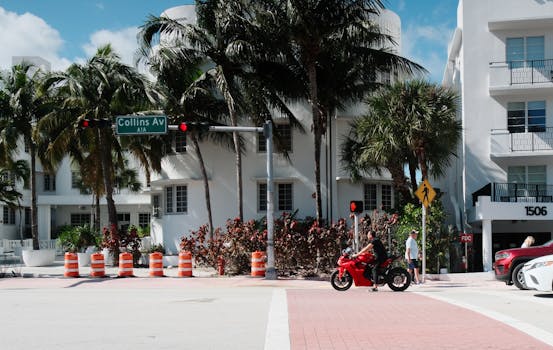
- Ocean Drive: The palm-lined street with Art Deco buildings, sidewalk cafes, vintage cars, and people-watching is Miami’s most photographed location
- White Sand & Turquoise Water: The beach itself delivers—soft white sand, warm water, volleyball nets, lifeguard stands painted in bright colors
- International Scene: You’ll hear Spanish, Portuguese, French, Italian, German on any given day—South Beach is genuinely international
- 24/7 Energy: Unlike most beaches that quiet down at sunset, South Beach transitions to nightlife—clubs open, restaurants fill, Ocean Drive buzzes until 4am
- Fashion Beach: This is where people pose at the beach, not just relax—fashionable swimwear, Instagram photoshoots, model scouting
Cultural Impact: South Beach has appeared in countless films (Scarface, Bad Boys, The Birdcage), TV shows (Miami Vice, Dexter), music videos, and fashion shoots. When casting directors need “sexy beach scene,” they call South Beach. Plan your visit with our 7-day Miami itinerary.
3 Cuban Culture & Little Havana
Miami has the largest Cuban population outside of Cuba (over 1.2 million Cuban Americans in metro Miami), making it the de facto capital of Cuban exile culture. This isn’t tourist “Cuban-themed” experiences—this is actual Cuban culture transplanted and thriving.
Why Miami became Cuban cultural capital:
- Geography: Just 228 miles from Havana—closest major US city to Cuba
- Immigration Waves: 1959 Cuban Revolution led to massive emigration, with Miami as primary destination. Mariel Boatlift (1980) brought 125,000 more Cubans
- Political Power: Cuban Americans wield significant political influence in Miami—many elected officials, business leaders, cultural figures are Cuban American
- Language: Spanish is effectively co-official language in Miami. You can live entirely in Spanish—schools, businesses, government services, media all function in Spanish
Little Havana (Calle Ocho): The heart of Cuban Miami—Calle Ocho (SW 8th Street) features:
- Domino Parks: Watch elderly Cuban men play dominoes and argue politics at Maximo Gomez Park
- Cuban Coffee Windows (Ventanitas): Order cafecito at walk-up windows—strong, sweet espresso shots in tiny cups
- Cigar Shops: Hand-rolled cigars, watching rollers work traditional methods
- Cuban Restaurants: Versailles (iconic since 1971), El Exquisito, Doce Provisions serving ropa vieja, lechón, tostones, Cuban sandwiches
- Live Music: Ball & Chain for salsa, son cubano, and tropical cocktails
🇨🇺 Cuban Cultural Contributions to Miami:
- Cuisine: Cuban sandwiches, pastelitos, croquetas, flan—now Miami staples
- Music: Salsa, son, mambo venues throughout city
- Language: “Spanglish” dialect unique to Miami
- Business: Cuban Americans built major Miami companies, banking, real estate
- Politics: Cuban exile community shaped US-Cuba relations for 60+ years
Discover authentic Cuban Miami in our Little Havana neighborhood guide.
4 Wynwood Walls & Street Art
Wynwood has become one of the world’s most famous street art districts, transforming from a warehouse district into an outdoor gallery with murals by international artists. When people think “Miami street art,” they’re thinking Wynwood.
Wynwood Walls Story:
- 2009 Launch: Developer Tony Goldman created Wynwood Walls—curating walls for famous street artists like Shepard Fairey, Os Gemeos, Kenny Scharf
- Organic Growth: Success of Wynwood Walls inspired building owners throughout neighborhood to commission murals—entire blocks covered in art
- Art Basel Effect: Miami’s Art Basel (December) attracts international art world—many new murals painted annually during Art Basel week
- Free Outdoor Museum: Unlike traditional galleries, Wynwood art is FREE, accessible 24/7, constantly evolving
What makes Wynwood unique:
- Scale: Not just a few murals—hundreds of walls covered in art across 50+ block area
- Quality: World-famous artists (not just local taggers)—Banksy, Retna, Kobra, Faile have painted here
- Instagram Heaven: Every corner is photogenic—visitors spend hours taking photos
- Evolution: Murals change—artists paint over old works with new ones, keeping district fresh
- Neighborhood Vibe: Beyond murals: craft breweries (Wynwood Brewing, Veza Sur), trendy restaurants (KYU, Coyo Taco), galleries, food trucks
Global Impact: Wynwood inspired street art districts worldwide—cities from London to São Paulo looked to Wynwood as model for transforming neighborhoods through street art. Explore Miami’s art scene with our complete things to do guide.
5 World-Class Nightlife
Miami nightlife is legendary—consistently ranked among the world’s top 5 nightlife cities alongside Ibiza, Las Vegas, Berlin, and Amsterdam. This isn’t just “good nightlife”—Miami has shaped global club culture.
What makes Miami nightlife famous:
- Beach Clubs: Unique to Miami—daytime pool parties transition to nighttime clubs. Nikki Beach pioneered this concept
- Superclubs: LIV at Fontainebleau, STORY (closed 2020 but legendary), E11EVEN (24/7 club!)—multi-level venues with celebrity DJs
- Electronic Music Hub: Ultra Music Festival (March) brings 165,000+ people—world’s top EDM DJs perform
- Latin Influence: Unlike Vegas/NYC clubs, Miami clubs blend electronic with reggaeton, salsa, bachata—international crowd dances to diverse music
- Celebrity Culture: Expect celebrity sightings—athletes, musicians, models, actors regularly party in Miami clubs
- No Last Call: Some venues (E11EVEN) operate 24/7. Others close at 5am. The night is LONG in Miami
Famous Miami Nightlife Venues:
- LIV (Fontainebleau): Most famous Miami club—$100k+ bottle service tables, celebrity DJs weekly
- E11EVEN: 24/7 nightclub—come at 3am on Tuesday, still packed
- SPACE: Underground techno club—no cameras, serious dancers, goes until noon
- Ball & Chain (Little Havana): Salsa dancing, live bands, outdoor courtyard
- Rooftop Bars: Sugar at EAST Miami, Area 31, Juvia—skyline views with cocktails
💃 Miami Nightlife Reality Check:
- Expensive: Cover charges $30-100, drinks $15-25, bottle service $400-5,000+
- Dress Code: Strict—men need collared shirts, dress shoes (no sneakers/shorts/hats)
- Late Start: Clubs don’t get busy until midnight-1am, peak at 2-3am
- VIP Culture: Tables often required (reservations), general admission limited
6 Beautiful Year-Round Beaches
Miami offers 35+ miles of accessible beaches with different personalities—from touristy South Beach to serene Key Biscayne, party-centric Nikki Beach to family-friendly Crandon Park.
Famous Miami Beaches:
- South Beach (1st-23rd St): Most famous, most crowded, most photographed
- Mid-Beach (46th-63rd St): Quieter, family-friendly, local vibe
- North Beach (73rd-87th St): Least touristy, neighborhood feel
- Crandon Park Beach (Key Biscayne): 2 miles, calm bay side, #1 rated US beach by Dr. Beach
- Bill Baggs Cape Florida (Key Biscayne): Lighthouse, nature trails, pristine
- Haulover Beach: Clothing-optional beach (only legal nude beach in Florida)
Beach Culture: Miami beaches aren’t just for sunbathing—they’re social centers with volleyball, paddle boarding, kite surfing, beach bars, lifeguard stand parties, fashion, and people-watching.
7 Perfect Year-Round Weather
Miami’s tropical climate is a major attraction—when most of America is frozen (December-March), Miami is 75°F and sunny. This weather advantage drives tourism, attracts retirees, and shapes the entire Miami lifestyle.
Climate Impact: This weather enables outdoor dining year-round, beach culture 365 days, rooftop bars always open, fashion that prioritizes style over warmth, and a relaxed lifestyle impossible in cold climates. Learn the best time to visit Miami for your priorities.
8 Gateway to Latin America
Miami serves as the unofficial capital of Latin America—major corporations base their Latin American headquarters here, flights connect to every Latin American city, and Spanish is as common as English.
Why Miami is Latin America’s gateway:
- Geography: Closest major US city to Caribbean, Central America, South America
- Business Hub: 1,400+ multinational corporations have Latin American HQ in Miami
- Banking Center: Major Latin American wealth parks money in Miami banks and real estate
- Cultural Bridge: Venezuelans, Colombians, Argentinians, Brazilians feel at home—Spanish spoken, Latin culture understood
- Flight Connections: Miami International Airport (MIA) is Americas’ gateway—more flights to Latin America than any other US city
Multicultural Reality: Walk Brickell Avenue and hear Spanish, Portuguese, French, Haitian Creole, Italian. Check out diverse Miami neighborhoods to experience this multiculturalism.
9 Diverse Food Scene
Miami’s food scene rivals any major US city, blending Cuban, Caribbean, South American, and American influences with celebrity chefs and innovative restaurants.
Famous Miami Foods:
- Cuban Sandwich: Ham, roasted pork, Swiss cheese, pickles, mustard on Cuban bread—invented in Florida, perfected in Miami
- Stone Crab: Joe’s Stone Crab (since 1913) made these claws famous—sweet meat, served cold with mustard sauce (season: October-May)
- Ceviche: Fresh fish “cooked” in citrus—every Latin American country represented
- Arepas: Venezuelan corn cakes stuffed with meats, cheese—food truck phenomenon
- Key Lime Pie: Florida Keys dessert—tangy, sweet, graham cracker crust
Celebrity Chef Scene: Michelle Bernstein, José Andrés (Bazaar Mar), Michael Schwartz (Michael’s Genuine), Jean-Georges Vongerichten—Michelin-level talent cooking in Miami.
10 Celebrity & Wealth Culture
Miami attracts celebrities, athletes, and wealthy international residents drawn by no state income tax, tropical lifestyle, and international atmosphere. This creates visible wealth and celebrity culture throughout the city.
Famous Miami Residents (Past & Present):
- Athletes: LeBron James, Dwyane Wade, Udonis Haslem (Miami Heat era), Tom Brady (briefly)
- Musicians: Pitbull (Mr. 305), Gloria Estefan, Enrique Iglesias, Shakira, DJ Khaled
- Actors: Matt Damon, Sylvester Stallone, Eva Mendes
- Business: Jeff Bezos, Ivanka Trump, Jared Kushner (relocated 2020-2021)
Why they choose Miami: No state income tax (major savings for high earners), tropical weather, international airports, privacy (less paparazzi than LA/NYC), Latin American business connections, luxury real estate.
11 Miami Vice Legacy
The 1984-1989 TV show “Miami Vice” dramatically shaped Miami’s global image—neon colors, pastel suits, Ferrari Testarossa, cigarette boats, Art Deco architecture, synth music. This show put Miami on the cultural map.
Miami Vice Impact:
- Tourism Boom: Show triggered 1980s Miami tourism explosion—people wanted to see the Miami Vice locations
- Fashion Influence: Pastel colors, no socks with loafers, casual sophistication—Miami Vice defined 1980s style
- Architecture Appreciation: Show showcased Art Deco buildings, raising awareness and supporting preservation efforts
- Music: Popularized synth-pop, new wave music—Jan Hammer’s theme song iconic
- Lasting Image: Even 40 years later, “Miami Vice aesthetic” remains cultural shorthand for Miami style
12 Major Sports Teams
Miami has professional teams in all four major sports, with the Miami Heat being particularly famous for multiple championships and LeBron James’s era.
Miami Sports Teams:
- Miami Heat (NBA): 3 championships (2006, 2012, 2013), LeBron James era, Dwyane Wade legacy
- Miami Dolphins (NFL): 2 Super Bowls (1972, 1973), 1972 perfect season (only undefeated NFL season)
- Florida Panthers (NHL): 2024 Stanley Cup Champions!
- Miami Marlins (MLB): 2 World Series titles (1997, 2003)
- Inter Miami CF (MLS): Lionel Messi joined 2023—massive international attention
13 World’s Cruise Capital
Miami is the world’s busiest cruise port, with 5.5+ million cruise passengers annually. PortMiami serves 50+ cruise ships, connecting to Caribbean, Bahamas, Mexico, Panama Canal, and transatlantic routes.
Why Miami dominates cruising:
- Geography: Gateway to Caribbean—shortest distance to islands
- Year-Round Season: Tropical climate enables cruising 365 days (vs seasonal northern ports)
- Airport Access: MIA 15 minutes from port—easy fly-cruise connections
- Cruise Lines HQ: Carnival, Royal Caribbean, Norwegian—all headquartered in Miami
14 Luxury Real Estate & Architecture
Miami’s skyline has exploded with ultra-luxury high-rises in the past 20 years, particularly in Brickell and Edgewater. This architectural boom attracts international buyers and investors.
Famous Buildings:
- Porsche Design Tower: Car elevators to penthouse garages
- Zaha Hadid’s One Thousand Museum: Sculptural exoskeleton design
- Herzog & de Meuron’s 1111 Lincoln Road: Architectural parking garage (yes, really)
- Brickell: Entire neighborhood transformed 2000-2020 from low-rise to Manhattan-style towers
Real Estate Attraction: No state income tax, international city, tropical lifestyle, and strong property rights make Miami magnet for global wealth—especially Latin American, European, and Middle Eastern buyers.
15 Fashion & Miami Style
Miami has a distinctive fashion identity—bold colors, body-conscious fits, casual sophistication, and perpetual summer style. “Miami style” is globally recognizable.
Miami Fashion Characteristics:
- Color: Bright colors acceptable (hot pink, electric blue, neon green)—unlike NYC/LA black dominance
- Body Consciousness: Climate encourages less clothing, more fitted styles
- Casual Luxury: Expensive but relaxed—$500 designer t-shirt with shorts acceptable at nice restaurants
- Beach Transitions: Fashion must work from beach to dinner—coverups, linen, versatile pieces
- Latin Influence: Tighter fits, more glamour than typical American casual
Fashion Events: Miami Swim Week (July)—world’s largest swimwear fashion event. Art Basel (December)—brings international fashion crowd.
🌴 Ready to Experience What Makes Miami Famous?
Plan your Miami trip with our comprehensive travel guides—itineraries, neighborhoods, hotels, and insider tips.
Explore Miami Travel Guide →Why Miami is World-Famous: Summary
Miami’s fame stems from a unique combination of factors that no other American city replicates:
- Visual Identity: Art Deco architecture + neon + palm trees + turquoise ocean = instantly recognizable aesthetic
- Cultural Fusion: Genuine Latin American culture (not themed) mixed with American beach culture creates unique multicultural energy
- Climate Advantage: Year-round tropical weather enables outdoor lifestyle impossible in most US cities
- International Gateway: Geographic and cultural bridge between Americas—truly international city
- Lifestyle Brand: “Miami” represents glamour, parties, beaches, celebrity, warmth—aspirational lifestyle marketed globally
Miami isn’t just famous for one thing—it’s famous for being a place where Cuban coffee culture meets beachfront Art Deco, where street art transforms warehouses into galleries, where celebrities party alongside international tourists, where Spanish and English blend into Spanglish, where winter doesn’t exist.
That combination? That’s pure Miami. And that’s why, when people think of iconic American cities, Miami—despite being relatively young and small—ranks alongside New York, Los Angeles, and Las Vegas in global recognition.