
Expertly crafted itineraries for every corner of the United States — from rugged national parks to neon-lit cities, coastal highways to desert canyons.
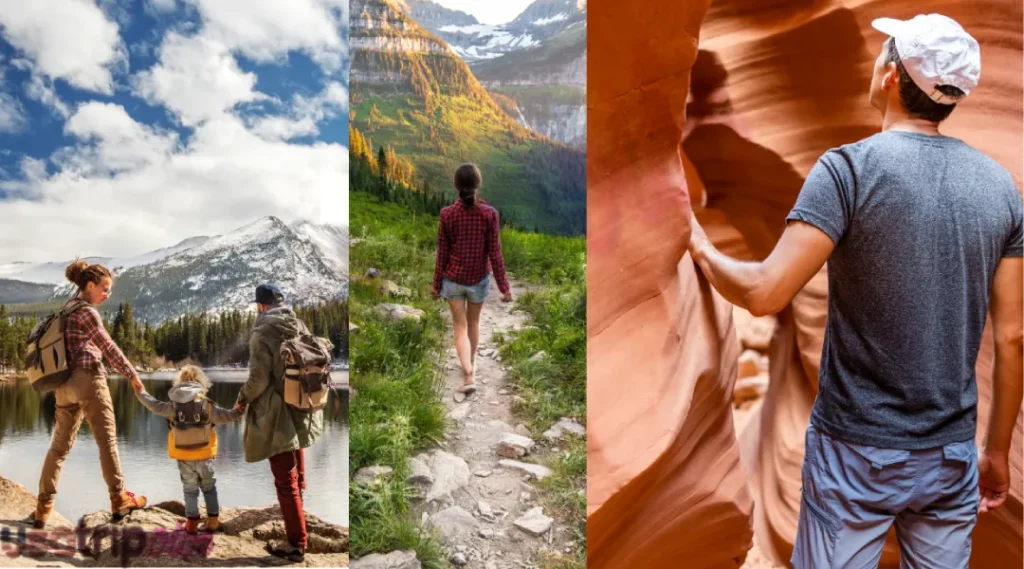
18 itineraries · 50 states covered · 7 travel styles
- 1. The Great Southwest Road Trip {#southwest}
- 2. Classic East Coast Road Trip {#east-coast}
- Overview
- Day-by-Day Itinerary
- 3. Pacific Coast Highway {#pch}
- Overview
- Day-by-Day Itinerary
- 4. Rocky Mountain National Parks Loop {#rockies}
- Overview
- Day-by-Day Itinerary
- 5. Deep South Music & Soul Trail {#south}
- Overview
- Day-by-Day Itinerary
- 6. New England Fall Foliage {#new-england}
- Overview
- Day-by-Day Itinerary
- 7. Florida Keys & Key West {#florida-keys}
- Overview
- Day-by-Day Itinerary
- Planning Tips {#planning}
- Renting a Car
- Camping vs Hotels
- America the Beautiful Annual Pass
- Essential Apps
- Getting Around
- When to Go — Seasonal Guide {#seasonal}
1. The Great Southwest Road Trip {#southwest}
Duration: 14 Days | Region: Southwest USA | Style: Road Trip | Difficulty: Moderate | Best Season: October – April | Distance: ~2,400 miles
Overview
This epic two-week loop takes you through the most dramatic and photogenic landscapes in the United States. From Las Vegas neon to Zion’s red sandstone walls, Bryce Canyon’s hoodoos to the Grand Canyon’s mile-deep abyss — every day delivers a jaw-dropping new backdrop. This is the USA at its most cinematic.
Day-by-Day Itinerary
Days 1–2 — Las Vegas, Nevada Arrive, explore the Strip, and visit the Neon Museum for a fascinating look at vintage Las Vegas signage. On your second day, take an optional trip to Valley of Fire State Park — otherworldly red sandstone formations just 50 miles from the city. Avoid the casinos if budget matters; Las Vegas has extraordinary free attractions including the Bellagio Fountains, the Fremont Street Experience, and the Arts District.
Day 3 — Zion National Park, Utah Drive 2.5 hours southwest to Zion. Hike the Narrows — a river walk through a dramatic slot canyon — or tackle Angels Landing (permit required) for sweeping panoramic views. Stay inside the park at Zion Lodge or in the gateway town of Springdale.
Day 4 — Bryce Canyon National Park Drive 1.5 hours east. Walk the Rim Trail at sunrise when the hoodoos glow orange-pink. An optional horseback ride takes you down through the canyon floor among the spires. Bryce Canyon is also one of the best dark sky locations in the continental US.
Days 5–6 — Antelope Canyon & Horseshoe Bend, Arizona Drive to Page, AZ. Book a Navajo-guided tour of Upper or Lower Antelope Canyon well in advance — this is non-negotiable, as they sell out months ahead. Hike to Horseshoe Bend (15-minute walk from the car park) at sunset for the classic Colorado River photograph.
Days 7–8 — Grand Canyon South Rim Drive 2.5 hours south. Watch sunrise at Mather Point, hike the Bright Angel Trail to Indian Garden, and drive Desert View Drive at dusk. Camping inside the park (Mather Campground, book via recreation.gov) is one of the great American experiences.
Days 9–10 — Monument Valley & Sedona Drive through Navajo Nation to Monument Valley for the self-drive scenic loop or a guided Jeep tour. Continue south to Sedona — red rock vortex hikes, upscale restaurants, and some of the best stargazing in Arizona.
Days 11–12 — Death Valley National Park Head west to Death Valley. Badwater Basin is the lowest point in North America at 282 feet below sea level. Zabriskie Point at sunrise is one of the most photographed landscapes in America. The Racetrack Playa (mysterious sliding rocks) requires a high-clearance vehicle. Important: avoid visiting in summer — temperatures regularly exceed 50°C (122°F). October to April only.
Days 13–14 — Return to Las Vegas It’s 2.5 hours from Death Valley back to Las Vegas. Spend a final night on the Strip. Optional helicopter tour of the Grand Canyon before departure from Harry Reid International Airport.
Practical Info
- America the Beautiful Pass ($80) covers all national park entry fees on this route
- Book Antelope Canyon tours 2–3 months ahead in peak season
- Book Angels Landing permits via the lottery system on recreation.gov
- Best car: SUV or full-size sedan — no 4WD required unless visiting the Racetrack
2. Classic East Coast Road Trip {#east-coast}
Duration: 10 Days | Region: Northeast USA | Style: Road Trip | Difficulty: Easy | Best Season: May – October | Distance: ~1,500 miles
Overview
America’s most storied road trip — from the colonial cobblestones of Boston all the way to the Art Deco beaches of Miami. History, food, culture, and coastline in one definitive drive through the eastern seaboard.
Day-by-Day Itinerary
Days 1–2 — Boston, MA Walk the Freedom Trail — a 3-mile self-guided route past 16 historic sites including Paul Revere’s house and the Old North Church. Explore Fenway Park, the oldest ballpark in Major League Baseball. Head to the North End (Boston’s Little Italy) for the best Italian food on the East Coast. Day trip to Cambridge to visit Harvard Yard and MIT.
Days 3–4 — New York City, NY Central Park, the High Line, the Brooklyn Bridge walk, MoMA, one Broadway show. The Statue of Liberty ferry is worth the trip but book ahead. Stay in Midtown (convenient) or Brooklyn (better value, great food). Use the subway — driving in Manhattan is not recommended.
Day 5 — Philadelphia, PA Drive 1.5 hours south. See the Liberty Bell and Independence Hall (where both the Declaration of Independence and the US Constitution were signed). Lunch at Reading Terminal Market, one of the oldest and largest public markets in the US. The Philadelphia Museum of Art “Rocky steps” are optional but unmissable for film fans.
Day 6 — Washington D.C. All 19 Smithsonian museums are free. Walk the National Mall from the Lincoln Memorial to the US Capitol. The National Air and Space Museum, National Museum of Natural History, and the National Portrait Gallery are all exceptional. Arlington National Cemetery is worth a half-day visit.
Day 7 — Shenandoah Valley, VA Drive Skyline Drive along the Blue Ridge Mountains — 105 miles of one of the most scenic roads in the eastern US. Stunning fall foliage from September to November. Luray Caverns nearby is a worthwhile detour.
Day 8 — Savannah, GA The most architecturally beautiful city on the East Coast. Spanish moss draped over live oaks, 22 historic squares, antebellum mansions, and outstanding Southern cuisine. Walking food tours are the best way to explore. Stay at least one night.
Days 9–10 — Miami, FL End the drive on South Beach. Art Deco Historic District walking tour, Wynwood Walls street art, Little Havana’s Calle Ocho. Optional Everglades airboat tour on your final morning before departing from Miami International Airport.
Practical Info
- Avoid driving into Manhattan or central Boston — use park-and-ride or public transit
- I-95 has frequent traffic delays — budget extra time between cities
- The drive is fully doable in a standard rental car
3. Pacific Coast Highway {#pch}
Duration: 7 Days | Region: West Coast, California | Style: Coastal Drive | Difficulty: Easy | Best Season: April – October | Distance: ~600 miles
Overview
Highway 1 between San Francisco and Los Angeles is consistently rated one of the greatest road trips in the world — a ribbon of tarmac clinging to sea cliffs above the Pacific, passing through Big Sur, Hearst Castle, and Santa Barbara.
Day-by-Day Itinerary
Day 1 — San Francisco Golden Gate Bridge (walk or bike across), Fisherman’s Wharf, Mission District murals, a sourdough bread bowl at the Ferry Building Marketplace. Head to Haight-Ashbury for countercultural history, or the Castro for architecture and restaurants.
Day 2 — Santa Cruz & Monterey Drive 1.5 hours south. Santa Cruz Boardwalk (America’s oldest surviving seaside amusement park), Natural Bridges State Beach (monarch butterflies November to February), and the world-class Monterey Bay Aquarium. Drive the 17-Mile Drive through Pebble Beach — $10.75 per car, worth every cent.
Day 3 — Carmel & Big Sur Carmel-by-the-Sea is one of the most charming towns in California — no street addresses, no chain restaurants, dogs welcome everywhere. Head south into Big Sur: Bixby Creek Bridge for photos, McWay Falls (an 80-foot waterfall that drops directly onto a beach), and the Henry Miller Library in a redwood grove.
Day 4 — San Simeon & Hearst Castle Stop at the Elephant Seal Rookery in San Simeon — over 17,000 northern elephant seals haul out here seasonally, and viewing is free. Hearst Castle tours must be booked in advance. Continue to Morro Bay for sunset over the volcanic Morro Rock.
Day 5 — San Luis Obispo & Pismo Beach San Luis Obispo’s Thursday night farmers market (State Street, 6–9pm) is the best in California. Pismo Beach sand dunes. Solvang is a Danish village in the Santa Ynez Valley worth an hour’s detour.
Day 6 — Santa Barbara The American Riviera. Red-tiled Spanish mission architecture, State Street cafes, wine country 30 minutes inland (Santa Ynez Valley). Most walkable town on the route.
Day 7 — Malibu & Los Angeles Zuma Beach, the Getty Villa (free timed-entry tickets, book ahead), Santa Monica Pier, Venice Beach Boardwalk. End the trip with dinner in Silver Lake or Los Feliz.
Practical Info
- Drive south (SF to LA) for better cliff-edge views and easier pull-outs
- Big Sur has limited mobile signal — download offline Google Maps before you go
- Book Big Sur accommodation months in advance in summer
4. Rocky Mountain National Parks Loop {#rockies}
Duration: 12 Days | Region: Rocky Mountains | Style: Nature / Active | Difficulty: Active | Best Season: June – September | Distance: ~2,200 miles
Overview
A magnificent circuit through the crown of the American wilderness — Yellowstone’s geothermal wonders, Grand Teton’s cathedral peaks, and Glacier National Park’s Going-to-the-Sun Road, one of the most dramatically engineered mountain roads on earth.
Day-by-Day Itinerary
Days 1–2 — Denver, CO & Rocky Mountain National Park Fly into Denver. Drive 1.5 hours north to Estes Park (gateway to Rocky Mountain NP). Trail Ridge Road is the highest continuously paved road in the US at 12,183 feet. Moose and elk are commonly spotted at dusk near Moraine Park.
Days 3–5 — Yellowstone National Park, WY Drive north through Wyoming. Yellowstone is the world’s first national park — 3,400 square miles of geothermal activity, wildlife, and wilderness. Old Faithful erupts every 60–110 minutes. The Grand Prismatic Spring (best seen from above on the Fairy Falls Trail) is the most photographed feature in the park. Lamar Valley at dawn is the best place in North America to spot wolves and grizzly bears in the wild. Allow two full days minimum.
Days 6–7 — Grand Teton National Park, WY Drive 1 hour south from Yellowstone. The Teton Range rising abruptly from the flat Jackson Hole valley floor is one of the most striking mountain vistas in the US. Snake River float trips (with views of the Tetons), Jenny Lake loop hike, and Jackson Hole for evenings and dining.
Days 8–10 — Glacier National Park, MT Drive 5–6 hours north into Montana. Going-to-the-Sun Road is only fully open mid-June through October — check road conditions before going. Hidden Lake Overlook hike and Many Glacier Valley are the highlights. Book accommodations inside the park (Many Glacier Hotel, Lake McDonald Lodge) 6 months in advance — they sell out immediately.
Days 11–12 — Return via Beartooth Highway If returning through Wyoming, the Beartooth Highway (US-212) between Red Lodge, MT and Cooke City, WY is described by many as the most beautiful road in America. Return flight from Denver or Salt Lake City.
Practical Info
- America the Beautiful Pass ($80) covers all park entry fees on this route (saves ~$120)
- Campgrounds in Yellowstone and Glacier fill by 9am in summer — arrive early or book months ahead
- Bear spray is essential for any backcountry hiking — available to rent at park visitor centres
5. Deep South Music & Soul Trail {#south}
Duration: 9 Days | Region: Deep South | Style: Culture | Difficulty: Leisurely | Best Season: October – April | Distance: ~800 miles
Overview
The Mississippi Blues Trail is one of the most culturally significant journeys in America — the heartland of blues, jazz, soul, and rock ‘n’ roll. Nashville honky-tonks, Memphis barbecue joints, Delta juke joints, and New Orleans jazz clubs in one soulful road trip.
Day-by-Day Itinerary
Days 1–2 — Nashville, TN Country Music Hall of Fame & Museum (allow 3 hours), Lower Broadway honky-tonks (free live country music all night on every block), the Bluebird Cafe (intimate songwriter showcase venue — book tickets weeks ahead), and hot chicken at Prince’s Hot Chicken Shack.
Days 3–4 — Memphis, TN Drive 3.5 hours west. Beale Street (birthplace of the blues), Sun Studio (where Elvis, Johnny Cash, Roy Orbison, and Jerry Lee Lewis all recorded — book the 45-minute tour), Graceland (Elvis’s home — worth the full mansion + automobile museum package), and the National Civil Rights Museum at the Lorraine Motel, built around the room where Dr. Martin Luther King Jr. was assassinated. Best BBQ in the world: Charlie Vergos’ Rendezvous or Payne’s Bar-B-Q.
Day 5 — Mississippi Delta Blues Trail Drive 1.5 hours south to Clarksdale, MS — the mythological crossroads where Robert Johnson allegedly sold his soul to the devil in exchange for guitar mastery. Visit the Delta Blues Museum, the GRAMMY Museum Mississippi, and Ground Zero Blues Club (co-owned by Morgan Freeman). The surrounding Delta countryside is flat, wide, and profoundly atmospheric.
Days 6–7 — New Orleans, LA — Part 1 Drive 4 hours south. The French Quarter is compact and walkable — Jackson Square, St. Louis Cathedral, Royal Street galleries. Frenchmen Street (not Bourbon Street) is where locals go for live jazz. Café Du Monde’s beignets at 2am is a non-negotiable experience. Eat a po’boy at Domilise’s, a muffuletta at Central Grocery, and crawfish étouffée wherever you can find it.
Days 8–9 — New Orleans — Part 2 & Bayou Garden District mansion tour, Magazine Street antiques and shopping, a swamp boat tour through the Atchafalaya Basin (alligators, herons, Spanish moss). Final morning: Commander’s Palace for a legendary jazz brunch.
Practical Info
- Avoid visiting New Orleans during Mardi Gras unless you’ve booked accommodation a year ahead
- Hurricane season runs June–November — consider travel insurance
- Most live music venues on Frenchmen Street are free or charge a small cover
6. New England Fall Foliage {#new-england}
Duration: 7 Days | Region: New England | Style: Scenic Drive / Seasonal | Difficulty: Easy | Best Season: Late September – Mid-October | Distance: ~700 miles
Overview
Each autumn, New England’s forests transform into an enormous canvas of crimson, amber, and gold. This 7-day loop through Vermont, New Hampshire, and coastal Maine is one of the most beloved seasonal trips in the United States. Peak colour typically falls between late September and mid-October.
Day-by-Day Itinerary
Day 1 — Boston, MA Fly in, explore Beacon Hill and the Public Garden. Try the New England clam chowder at Legal Sea Foods, or oysters at Island Creek Oyster Bar. This is your last city stop before heading into the countryside.
Days 2–3 — Vermont Drive northwest to Stowe (most picturesque ski village in New England), then south through Woodstock (often called the prettiest village in America) and the Green Mountain Byway. Stop at Cold Hollow Cider Mill in Waterbury for fresh apple cider doughnuts. Visit a sugarhouse — many offer maple syrup tastings and sell direct from the farm.
Day 4 — White Mountains, New Hampshire The Kancamagus Highway (NH Route 112, 34 miles) is the most spectacular foliage drive in the eastern United States. Crawford Notch State Park, Echo Lake, and the Mount Washington Hotel are all along this corridor. Mount Washington Cog Railway if weather is clear. North Conway makes a good overnight base.
Day 5 — Portland, Maine Portland is one of the best food cities in New England — remarkable given its modest size. Old Port waterfront district, the Portland Head Light lighthouse (the most photographed lighthouse in the US), and Fort Williams Park. Lobster roll at Red’s Eats in Wiscasset (queue forms early).
Days 6–7 — Acadia National Park & Bar Harbor, ME Acadia is the crown jewel of New England’s outdoor scene. Cadillac Mountain is the first place in the continental US to see sunrise in autumn — arrive 45 minutes before dawn. The carriage road network (built by John D. Rockefeller Jr.) is ideal for cycling. Jordan Pond for popovers and afternoon tea. Return to Boston via scenic coastal Route 1.
Practical Info
- Peak foliage varies by year — check foliage tracking maps (smokyfall.com or yankeefoliage.com) the week before departure
- Accommodation in Vermont and Maine fills up 3–4 months ahead during peak foliage weeks
- Cadillac Mountain requires a timed vehicle reservation from late May through October — book at recreation.gov
7. Florida Keys & Key West {#florida-keys}
Duration: 5 Days | Region: Florida | Style: Coastal Drive | Difficulty: Easy | Best Season: November – May | Distance: ~160 miles (Miami to Key West)
Overview
The Overseas Highway — US Route 1 threading through 30 islands over 42 bridges — is one of the most extraordinary drives in the world. Turquoise water on both sides of the car, coral reefs beneath the surface, and Key West’s legendary sunset at the end of the road.
Day-by-Day Itinerary
Day 1 — Miami to Key Largo Stop at Biscayne National Park for a glass-bottom boat tour over the living coral reef — the only one of its kind in the continental US. John Pennekamp Coral Reef State Park in Key Largo is the only underwater state park in the US — snorkelling and diving trips depart throughout the day.
Day 2 — Islamorada The self-proclaimed “Sport Fishing Capital of the World.” Robbie’s Marina offers the famous tarpon feeding experience — large tarpon leap out of the water to take fish from your hand. Cost is around $5. Anne’s Beach is shallow and calm, ideal for families and snorkelling.
Day 3 — Marathon & Seven Mile Bridge The Seven Mile Bridge is the most iconic structure on the Overseas Highway. Bahia Honda State Park has consistently been rated one of Florida’s best beaches. Crane Point Museum and Nature Center covers 63 acres of tropical hammock and tidal lagoon.
Days 4–5 — Key West The southernmost city in the continental United States. Duval Street for bars and restaurants, Mallory Square for the nightly Sunset Celebration (street performers, musicians, and the sky turning amber over the Gulf), and the Hemingway Home & Museum (his polydactyl cats are still in residence). For the ultimate day trip: Dry Tortugas National Park, accessible only by seaplane or ferry — Civil War-era fort, crystal-clear snorkelling, and nesting sea turtles.
Practical Info
- Hurricane season runs June–November — the Keys are particularly vulnerable
- The Keys are expensive — fuel, food, and accommodation all cost significantly more than the mainland
- Book Dry Tortugas ferry (Yankee Freedom III) 2–3 months ahead in peak season
Planning Tips {#planning}
Renting a Car
Book your rental car in advance for better rates — prices can double or triple when booking within a week of travel. For most road trips a full-size sedan is sufficient, but an SUV is recommended for national park routes with unpaved roads. One-way rentals (pick up in one city, drop off in another) are often available at competitive rates and are worth considering for linear routes like the East Coast drive or PCH.
Camping vs Hotels
National Park campgrounds on recreation.gov open reservations 6 months in advance and fill within minutes for peak summer weekends at Yellowstone, Grand Canyon, and Acadia. If you miss the booking window, check for same-day cancellations or camp at less-popular sites nearby. For hotels near popular parks, book at least 3 months ahead in summer.
America the Beautiful Annual Pass
At $80, the America the Beautiful pass grants unlimited entry to all 400+ federally managed lands including every National Park. It pays for itself in just two or three park visits (most charge $20–$35 per vehicle per entry). Available at any park entrance, online at store.usgs.gov, or via the NPS app.
Essential Apps
- AllTrails — trail maps, difficulty ratings, user reviews, offline download
- GasBuddy — find the cheapest petrol along your route
- Roadtrippers — route planning with points of interest
- Recreation.gov — book campsites and timed entry permits
- NPS App — official National Park Service app with offline maps
- iOverlander — remote camping spots and road conditions
Getting Around
Flying within the US is fast and often cheap for longer distances — Southwest, Frontier, and Spirit offer low-cost domestic fares. Amtrak connects major East Coast cities and offers a scenic California Coast route. Greyhound and FlixBus cover routes where rail isn’t available. In cities, Uber and Lyft are reliable alternatives to renting a car.
When to Go — Seasonal Guide {#seasonal}
Spring (March – May)
Spring is the most underrated season for USA travel. Wildflowers carpet the Pacific Coast Highway and Texas Hill Country (bluebonnets, peak late March), crowds haven’t yet arrived at national parks, and temperatures are comfortable across most of the country. The Southwest is ideal in April and May before summer heat arrives.
Best destinations: Pacific Coast Highway, Southwest road trip, Great Smoky Mountains, Washington D.C. (Cherry Blossom Festival, late March to mid-April)
Summer (June – August)
Peak season across most of the US. Rocky Mountain national parks are fully accessible, New England’s coast is at its best, and Alaska offers the midnight sun and optimal wildlife viewing. Avoid the Southwest desert in summer — temperatures in Death Valley and Phoenix regularly exceed 45°C (113°F).
Best destinations: Alaska, Rocky Mountain NP Loop, Glacier NP, New England coast, Pacific Northwest
Fall (September – November)
Many experienced travellers’ favourite season. New England fall foliage peaks in mid-October. The Southwest road trip is at its best in September and October — comfortable temperatures and low crowds. Great Smoky Mountains peak foliage hits in late October.
Best destinations: New England Fall Foliage, Southwest Loop, Great Smoky Mountains, Pacific Coast Highway
Winter (December – February)
Southern destinations shine in winter. The Florida Keys and Miami are at their best (dry season, cooler temperatures, no humidity). Southern California remains pleasant. New Orleans comes alive for Mardi Gras (February). Ski destinations — Colorado’s Aspen and Vail, Utah’s Park City, Vermont’s Stowe — are at their peak.
Best destinations: Florida Keys, Miami, New Orleans, Southern California, Colorado/Utah ski resorts
Frequently Asked Questions {#faq}
What is the best USA road trip for first-time visitors?
The Pacific Coast Highway (San Francisco to Los Angeles, 7 days) and the Classic East Coast Road Trip (Boston to Miami, 10 days) are the two most accessible and iconic options for first-timers. The PCH wins for pure scenery; the East Coast wins for historical and cultural depth.
How many days do you need for a USA road trip?
Seven days is the minimum for a satisfying single-region trip (PCH or Florida Keys). Ten to fourteen days allows for a more substantial loop like the Southwest or East Coast. Three weeks or more lets you combine regions — a Southwest loop plus Vegas, for example, or East Coast plus Deep South.
What is the best time of year to visit the USA?
There is no single best time — it depends entirely on the region. For national parks: June through September. For New England fall foliage: late September to mid-October. For the Southwest desert: October through April. For Florida and the Keys: November through May.
Do I need an international driving permit (IDP) to drive in the USA?
Citizens of most countries can drive in the US on their home country’s driving licence for up to 12 months. An IDP is recommended as a backup translation document but is not legally required. Check with your car rental company — some require it for non-English licences.
Is the America the Beautiful pass worth buying?
Yes, in almost every case. At $80 for 12 months of unlimited entry to all federal lands, it pays for itself after two or three national park visits. Every itinerary on this page visits enough parks and monuments to make the pass excellent value.
What is the cheapest way to do a USA road trip?
Camp at national park and state park campgrounds ($20–$35 per night vs $150+ for hotels near parks). Cook your own food using a camp stove or cooler. Book rental cars at least 4 weeks ahead. Use the America the Beautiful pass. Avoid peak summer weekends. Off-season travel (shoulder season, October–November or March–May) cuts costs significantly across accommodation and flights.
Are the USA’s national parks safe?
Yes, US national parks are very safe. Normal precautions apply: carry enough water (dehydration and heat illness are the most common emergencies), stay on marked trails, carry bear spray in bear country, and check weather conditions before hiking. Rangers are stationed throughout all major parks.
Last updated: March 2026. All distances, durations, and seasonal recommendations are approximate. Always verify entry requirements, permit systems, and booking windows directly with official sources before travel.